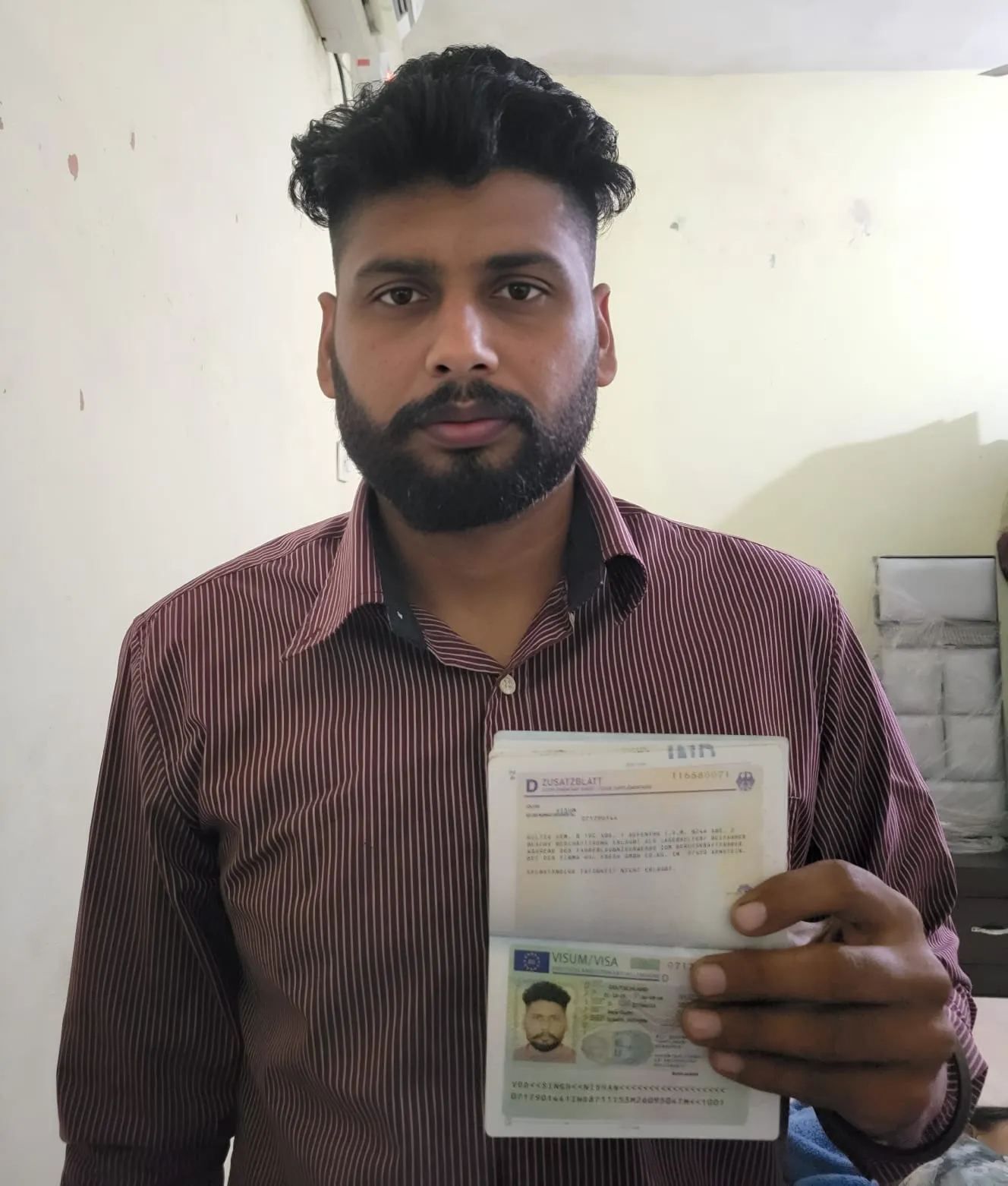
Europe Work Permit for Foreign Workers
A European work permit is a legal authorisation issued by a European country that allows non-EU citizens to work for a specific employer under defined conditions.
What is a European Work Permit
A Europe work permit is a formal document that gives non-EU nationals the legal right to work in a specific European country. It confirms that the worker, the employer, and the job role all meet the legal standards of that country.
Work permits in Europe are issued by individual European countries, not by the European Union as a whole. Each country has its own authority, its own rules, and its own application process. For example, Poland issues permits through the Voivodeship Office, Germany through the Federal Employment Agency, and France through its labour and immigration offices.
Most European countries follow an employer-driven system. This means the employer, not the worker, is responsible for applying for the permit. The permit is linked to a specific employer, a specific job role, and specific working conditions. If the job or employer changes, a new permit is usually required.
Types of Work Permits in Europe
Europe offers several types of work permits. The right one depends on the job role, the length of employment, and the country of work.
- Employer-Sponsored Work Permit This is the most common type of work permit in Europe. It is issued when a local employer offers a job to a foreign worker and applies for the permit on their behalf. It covers full-time roles in most industries, from IT and healthcare to manufacturing and logistics.
- Skilled Worker Permit The skilled worker permit is designed for professionals with higher qualifications, specialised training, or strong work experience. Many European countries use this category to attract engineers, doctors, IT experts, and other qualified professionals. Some countries also offer the EU Blue Card under this group.
- Seasonal Work Permit A seasonal work permit is issued for short-term jobs in sectors such as agriculture, fruit picking, tourism, and hospitality. It is usually valid for a limited number of months within a calendar year and is popular during peak working seasons.
- Temporary Work Permit A temporary work permit covers short-term or project-based roles that do not fall under seasonal work. It is often used for contract assignments, fixed-term jobs, and specific short-term industry needs.
- Intra-Company Transfer Permit This permit is used when a multinational company transfers an employee from a foreign branch to its European office. It covers managers, specialists, and trainees moving within the same company group.
Employer Responsibilities in Europe
European employers play a central role in the work permit process. They are not just sponsors, but also legal applicants and compliance holders.
Employers are responsible for applying for the work permit on behalf of the foreign worker through the correct national authority. They must provide a legal employment contract that clearly defines the job role, working hours, duties, salary, and duration of employment. Employers must also meet salary and labour law requirements set by the country, including minimum wage rules and fair working conditions.
In addition, employers must ensure compliance with local regulations, including social security contributions, tax rules, health and safety standards, and reporting duties. Failure to meet these requirements can lead to delays, refusals, or cancellation of the work permit.
Documents Required from the Employer
Employers must prepare a clear and complete set of documents to support the work permit application.
Company registration documents are required to confirm that the business is legally active in the country. A signed employment contract or a formal job offer must be included, along with a detailed job description that explains the worker's duties, skills, and responsibilities. Salary details must clearly show the agreed gross monthly income and match the country's legal standards.
Proof of business activity, such as tax records, financial statements, or trade documents, may also be requested. Some countries require a labour market test, which confirms that no suitable local or EU candidate is available for the role. The exact checklist depends on the country and industry.
Employee Requirements
Foreign workers must meet several basic requirements before applying for a Europe work permit.
The worker must be a non-EU, non-EEA, and non-Swiss citizen. A valid passport with enough validity for the full employment period is always required. The worker must have the required skills or qualifications for the job role, whether through education, training, or work experience. In many cases, language skills, professional licences, or trade certifications are also needed, depending on the country and sector.
The worker must also accept the employment terms offered by the employer, including the job role, salary, location, and duration. Any mismatch between the offer and the application can cause serious issues during the review.
Documents Required from the Employee
Foreign workers need to provide a clear set of documents for the work permit application.
A clear photocopy of the passport, including all personal details, is always required. An updated CV with full work history and education background should also be included. Educational certificates, such as diplomas, degrees, or transcripts, must be shared where needed. Work experience proof, such as previous employment letters, reference letters, or service certificates, helps confirm the worker's background.
A copy of the signed employment contract or job offer is part of the standard set. Depending on the country and job role, additional documents may be requested, such as medical certificates, police clearance certificates, professional licences, or language test results.
Europe Work Permit Process
The Europe work permit process follows a clear and structured sequence of steps. While the exact procedure varies by country, the overall flow is similar.
- Step 1: Employer Applies The European employer prepares and submits the work permit application to the relevant national authority. All required employer and employee documents are included with the application.
- Step 2: Documents Verified The authority carefully reviews the documents. It checks the employer's legal status, the job role, the worker's background, and whether the offered salary meets the legal standards.
- Step 3: Government Review The case is then passed through government review, which may include a labour market test, security checks, and verification of the worker's qualifications. Some countries also consult local employment offices at this stage.
- Step 4: Decision Issued After the review, the authority issues a formal decision. The application may be approved, refused, or sent back for additional documents and clarifications.
- Step 5: Work Permit Granted Once approved, the work permit is issued. In most cases, the foreign worker then applies for a work visa at the country's consulate before travelling. After arrival, the worker can start legal employment and, if needed, apply for a residence card.
Processing Time
Europe work permit applications usually take 1 to 3 months to process. The exact time depends on the country, the type of permit, the completeness of the documents, and whether a labour market test is needed. Some countries, such as Germany and the Netherlands, often move faster for skilled workers, while others may take longer during peak seasons.
Delays are common when documents are incomplete, translations are missing, or salary details do not match. Proper preparation helps reduce waiting time.
Validity and Conditions
A Europe work permit is issued with specific validity rules and conditions.
The permit is employer-specific, which means it is tied to the employer listed in the application. It is also job-specific, linked to a defined role, salary, working hours, and place of work. Most work permits are valid for 1 to 3 years, although the exact duration depends on the country and permit type. Seasonal permits are usually shorter, while intra-company transfer permits may follow different rules.
Renewal is required before the permit expires, especially if the employment continues. Work permits are also subject to national labour laws, including tax, social security, and employee protection rules. Any major change in employment usually requires a new or updated permit.
Common Mistakes to Avoid
Many work permit delays and refusals across Europe come from a few common and avoidable mistakes.
Incomplete documents remain the biggest issue, as missing papers often cause long delays or outright refusals. Salary below legal standards is another frequent problem, since each country has clear minimum wage and market rate rules. Listing an incorrect job role can lead to rejection, because the permit type must match the actual work being performed. Missing required approvals, such as labour market tests or sector-specific permissions, is another common reason for refusal.
Careful preparation, correct translations, and a final review of every document help avoid these simple but costly errors.
How AtoZ Serwis Plus Supports You
At AtoZ Serwis Plus, we help foreign workers and European employers move through the work permit process with clarity and care.
We offer documentation guidance, helping both sides prepare the correct papers in the right format for each country. Our team provides application support, making sure forms and details are accurate, complete, and aligned with local rules. We also offer employer coordination, assisting companies with their part of the process, including job descriptions, contracts, and compliance papers. In addition, we provide compliance assistance, so employers stay aligned with labour law and immigration rules throughout the employment period.
Our focus is on long-term support, honest guidance, and professional help at every stage of the work permit journey.

Confused About Europe Work Permit? Get Expert Guidance
AtoZ Serwis Plus provides professional support for European work permit applications, helping employers and foreign workers understand requirements, prepare accurate documentation, and manage the permit process with clarity and confidence.